
"coffee mesh size"
600 article(s) found

Brazilian Coffee Taste priority Origin rating system
The grading system of Brazilian coffee is very special, which is based on the results of the Brazilian cup test as the main basis for grading, rather than referring to altitude, bean size, and so on, as most other coffee beans do. So when we choose and buy Brazil, we often add the number of coffee beans to show its size.

Understand the classification characteristics of Blue Mountain Coffee what is the grade of Jamaica Blue Mountain No. 1 coffee bean
According to the law, only beans produced in the Blue Mountain area can be called Blue Mountain Coffee. High-quality Blue Mountain Coffee is divided into three grades: No. 1 (more than 17cm 18 mesh), No. 2 (16 mesh) and No. 3 (15 mesh), with a size of 17 mesh equivalent to 17x64 inches; they taste (all through dental sales and recognized by the government.

Kenyan coffee grading system on how to brew? Flavor description? What taste?
Kenyan coffee grading system on how to brew? Flavor description? What taste? The coffee grading system in Kenya was established under the policy of the government leading the management of quality and tutoring coffee farmers. After the coffee was harvested, the official unit of the Kenya Coffee Agency (Coffee Board of Kenya referred to as CBK) was established in 1933 in the capital Nairobi (N).
What are the grades of coffee beans? national standard coffee bean rating standard
Explore the coffee classification system! Teach you to read the label on a coffee bag when we go to a coffee shop to buy a cup of coffee or coffee beans, we always see a series of words, which are interspersed with several initials, such as AA, G1, SHG, etc., which actually means that each country classifies coffee according to its characteristics. It is worth noting that in different producing countries, there will be different habits.

Introduction to the international classification of the standard production mode of raw coffee beans in Indonesia
Indonesian coffee beans are handled differently in different countries, so there are a variety of classification methods, and there is no unified method in the world at present. Generally speaking, a producing country uses only one method, and the commonly used ones are as follows: ◎ classifies coffee beans according to the size of coffee beans. This grading method is based on a variety of perforated sieves, which have various specifications, identified and compiled by numbers.

Baking suggestion of Pacamara Coffee Bean | Variety Analysis of Pacamara Coffee Bean | Price of Pakamara Coffee Bean
Professional coffee knowledge exchange more coffee bean information please follow the coffee workshop (Wechat official account cafe_style) about the roasting of Pacamara, I believe many roasters still have a lot of questions, including when we test the samples of roasting cups, we also know very well that it takes certain technology and experience to present its best flavor. To help our baker.
Coffee beans Brazil does not have No.1
Now in the global coffee trade, it is still popular to use the classification standard of origin, generally there are two methods, according to the number of items (that is, particle size), and the other is according to the ratio of defective beans. For example, Brazil's Santos # 18 No.2 represents 18-mesh coffee beans (the largest is 19-mesh), and No.2 is the highest level, because Brazilians think that there are no perfect coffee beans, so the most
Colombian coffee grading
According to the classification of defective beans, defective beans can be divided into two types:-first: called first-class defects-second: called second-level defects. First: main defects (defects that affect the taste characteristics of coffee): black beans. Private exporters of moldy beans or sour beans: no more than 12 national coffee committees: no more than 8 first-level defective beans, second: secondary defects
Global Coffee Bean grading system details of Raw Bean grading Standards in Coffee producing countries
For the exchange of professional baristas, please pay attention to the naming methods of coffee in coffee workshop (Wechat official account cafe_style): G1, G2, G3, G4, AA, PB, SHB, SHG, EP, PLANTATION. What exactly does it stand for? The information that may be included in the name of a coffee is: country, producing area, variety, treatment, cup quality, bean order, bean shape or bean color, defect quantity

What is the difference between Kenya aa and Kenya ab? introduction to Kenya aa hierarchy
Professional coffee knowledge exchange more coffee bean information please follow the coffee workshop (Wechat official account cafe_style) Front Street Coffee-Kenya Coffee Grade introduction Kenya coffee beans have a strict grading system, according to the size of coffee beans taken out by washing plants
[literacy] have you made a clear distinction between the coffee bean grading criteria? (above)
There are different ways to manage the origin of coffee beans, some are composed of large and small farmers, some are dominated by professional business owners, even if the coffee in the same place, its quality and flavor are also different, in order to mark the quality of coffee, but also in order to make the transaction more convenient, so there is coffee grading. Coffee beans are processed differently in different countries, so they are produced.

Analyze what kinds of boutique coffee beans have what flavor and taste is fine coffee hand-brewed?
Professional coffee knowledge exchange more coffee bean information Please follow the coffee workshop (Wechat official account cafe_style) Fine Coffee (Specialty Coffee) as a proper term, it was first proposed by Ms. Erna Knustsen, who is known as the godmother of fine coffee, in the Tea and Coffee monthly (Tea Coffee Trade Journal) in 1974.
Colombian coffee raw bean grading method
One: according to the defect rate, the number of defective beans allowed per 500 gr sample:-Private raw bean exporter: 72 defects-National Coffee Council: 42 defects defective beans are divided into two types:-first: known as first-level defects-second: called second-level defects first: main defects (defects that affect coffee taste characteristics): black beans, moldy beans.

An article clarifies the grading system and standard of Kenyan coffee what are the characteristics of Kenyan aa coffee
Professional coffee knowledge exchange more coffee bean information please follow coffee workshop (Wechat official account cafe_style) Kenyan coffee _ Kenyan coffee beans _ Kenyan coffee brand boutique coffee farm production area Kenya coffee grading system is established under the policy of government-led management of quality and guidance to coffee farmers, coffee is an official unit set up by the government after the harvest is completed.
Description of the flavor and taste of Tanzania's top coffee Ruvuma (Lumumar) AAA coffee beans
Tanzania's top coffee Ruvuma (Lumuma) AAA Kenya AA TOP is the highest grade in Kenya, while Lumumar AAA is the highest grade in Tanzania, with a particle size of about 18-20 mesh, with a clear central separation line after roasting. Zhongshenpei and Kenyan AA TOP have their own advantages and characteristics, and should be recommended. The rich aroma of coffee implies a hint of chocolate milk and core.
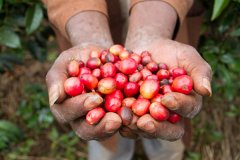
Colombian coffee raw bean grading method
One: according to the defect rate, the number of defective beans allowed per 500 gr sample:-Private raw bean exporter: 72 defects-National Coffee Council: 42 defects defective beans are divided into two types:-first: known as first-level defects-second: called second-level defects first: main defects (defects that affect coffee taste characteristics): black beans, moldy beans.

Colombian coffee is classified according to defective beans.
According to the classification of defective beans, defective beans can be divided into two types:-first: called first-class defects-second: called second-level defects. First: main defects (defects that affect the taste characteristics of coffee): black beans. Private exporters of moldy beans or sour beans: no more than 12 national coffee committees: no more than 8 first-level defective beans, second: secondary defects
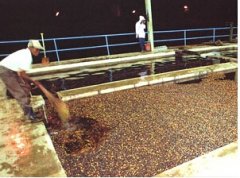
Characteristics of Colombian boutique coffee beans Colombian boutique coffee
According to the classification of defective beans, defective beans can be divided into two types:-first: called first-class defects-second: called second-level defects. First: main defects (defects that affect the taste characteristics of coffee): black beans. Private exporters of moldy beans or sour beans: no more than 12 national coffee committees: no more than 8 first-level defective beans, second: secondary defects

How does the 21-mesh gold mantenin coffee bean taste in Indonesia? introduction to the coffee producing area of Gao Mantenin
Professional coffee knowledge exchange more coffee bean information please follow the coffee workshop (Wechat official account cafe_style) and accidentally got some 19-mesh wet planed Manning coffee, from the surface, we can see that this one is extremely fresh. However, from previous experience, it is more safe to serve deeply. But the most surprising thing happened in the baking.

What are the grades of Colombian coffee beans?
Following the comments (official Wechat account vdailycom) found that Beautiful Cafe opened a small shop of its own. According to the classification of defective beans, defective beans are divided into two types:-first: called first-level defects-second: called second-level defects first: main defects (defects affecting coffee taste characteristics): black beans, moldy beans or sour beans private raw bean exporters: first-level defects.